Jonathan Krather – The Observers Crossword Creator

Fully convinced by marriage, one makes regular deliveries, six letters.
Can you solve the clue? Read the interview with the man who created it.

Image

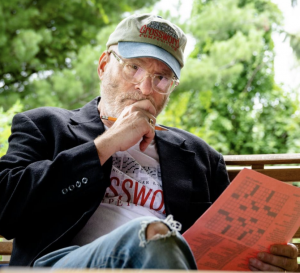
His name is Jonathan Krather and he sets crosswords for the observer.  Jonathan has been writing the Observers crossword puzzle for over 53 years.  To his crossword fans he is known as ‘Azed’. Clues like this are fairly common in his creations

“Marriage is tie. The institution of marriage a tie. So pause and tie makes posty.”

He says that he has Quite recently I’ve taken on a sort of a fellow compiler.
The fellow compiler is Colin Thomas otherwise knowin as Gemelo and he too writes crosswords for the Observer.

His intention is not to do the same things as Jonathan did, at least not at first. But tries to come up with his own special ideas  like

“Rhino is slang term for money. So African rhino is is a currency from an African country.”

“Leicester City Center. Well, the post code for Leicester City Center is L E1. And if you say L E1 using O N E spelling out one, you get Leon which is the currency of Sierra Leone.”

It really is a truly unique lineage – Colin says as Jonathan has been writing for over half a century. Before him there was Ximenes(Derrick Somerset Macnutt also known as the father of the cryptic crossword.) and Torquemada (Edward Powys Mathers British translator and the creator of some of the world’s most difficult cryptic crosswords.) who are like the mount Rushmore of Crossword Setters. They both basically created and shaped the guidelines and rules for what a cryptic can or cannot be or how the clues work.

How did Jonathan Start with this?

He sent the observer an in-memoriam crossword that he’d made in the shape of a large X for Ximenes and he said -“yes I’d like to print that” and by the way would you like to take the job?

Jonathan leapt at it , as he was only 29 at the time but he’s really been doing it ever since. Now he is 83  and he has made an awful lot of crosswords.

His nickname

Don Diego de Deza was a Spanish grand inquisitor. So for him it seemed quite appropriate to turn the name backwards and thus become AZED.

To watch the full interview go to

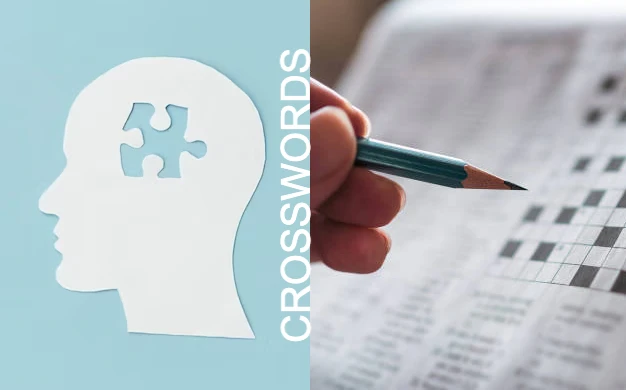
The Power of Crossword Puzzles: Boosting Memory and Cognitive Skills

Image

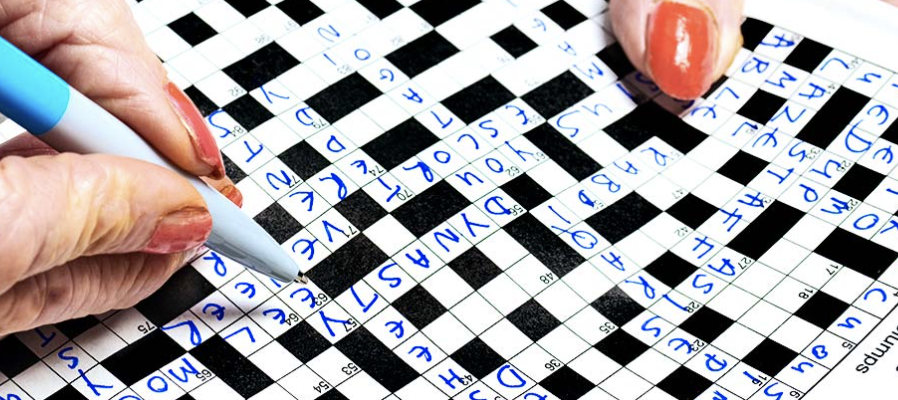
Research indicates that engaging in web-based crossword puzzles can potentially yield substantial cognitive and brain health benefits, especially for individuals facing mild memory challenges. There are some inherent advantages of playing puzzles and  integrating them into your daily routine can optimize your brains health. 

Crossword Puzzles vs. Cognitive Games

An informative study published in NEJM Evidence has unveiled the remarkable advantages of crossword puzzles in improving memory and cognitive function, instilling a glimmer of hope for individuals aspiring to maintain sharp and vibrant minds. 

For 18 months, this study focused on participants aged 62 to 80 with mild cognitive impairment, dividing them into two distinct groups:

  1. One that engaged in web-based crossword puzzles and 
  2. A second one that played web-based cognitive games 

The findings were striking! The group that embraced crossword puzzles experienced enhanced cognition and less brain shrinkage (compared to their counterparts playing cognitive games).

Enhancing Cognition: The Puzzle Piece

Over the course of the 12-week study, participants who diligently solved online crossword puzzles witnessed remarkable improvements in their cognitive abilities. On a 70-point scale measuring cognitive performance, crossword solvers gained approximately one point at the 12-week mark, with a further half-point improvement by the 78-week milestone. 

Although seemingly modest, these enhancements carry significant weight. In fact, a two-point difference on this scale served as the basis for FDA approval of memory-enhancing medications for individuals with Alzheimer’s disease.

Notably, 37% of crossword enthusiasts demonstrated at least a two-point improvement, highlighting the profound impact of this beloved hobby on cognitive function.

Preserving Brain Volume: A Shield Against Shrinkage

The study delved deeper into the effects of crossword puzzles on brain health, specifically targeting individuals with mild cognitive impairment and those experiencing normal aging. 

In both cases, the brain tends to undergo shrinkage over time. However, engaging in crossword puzzles proved to be a powerful intervention. Compared to individuals playing cognitive games, crossword enthusiasts experienced between 0.5% and 1% less shrinkage in critical brain structures like the hippocampus and cortex throughout the 18-month duration of the study. 

This difference underscores the impressive neuroprotective benefits of crossword puzzles.

How Many Crossword Puzzles Should You Do?

To reap the benefits of crossword puzzles, consider integrating them into your routine. The study protocol recommended working on crossword puzzles for 30 minutes four times a week. The puzzles were designed to be moderately difficult, comparable to a Thursday New York Times crossword puzzle.

Why Crossword Puzzles Work

There are several reasons why crossword puzzles positively impact thinking, memory, and brain health:

1. Mental Workout

Crossword puzzles are inherently challenging and engage our cognitive faculties. Research suggests that engaging in moderately difficult cognitive tasks promotes cognitive and brain health.

2. Multidimensional Brain Activation

Solving crossword puzzles activates multiple regions of the brain as we search for the right words. The interconnections, required between concepts, stimulate new neural connections, strengthening both the hippocampus and cortex. This dynamic process enhances overall brain function.

3. Social Engagement

For many, crossword puzzles are a social activity that fosters connectivity. Gathering with friends or family to work on a puzzle promotes interaction and stimulates communication, benefiting brain connectivity.

Are Crossword Puzzles Universally Beneficial?

Although these findings primarily apply to the specified population, further research is warranted to explore the potential benefits of crossword puzzles for individuals with normal cognitive function. 

Nevertheless, the positive outcomes suggest that crossword puzzles hold promise for a broader range of individuals.

Embrace the Power of Crossword Puzzles for Your Brain Health

The time has come to unlock the hidden potential of crossword puzzles and provide your brain with a well-deserved workout. By incorporating these puzzles into your routine, you can sharpen your cognitive abilities and safeguard your brain from possible shrinkage.

So, grab a crossword puzzle today and join millions on a journey of cognitive enhancement and brain health!

From Making Crosswords out of Boredom to Being Published in Nytimes

Image

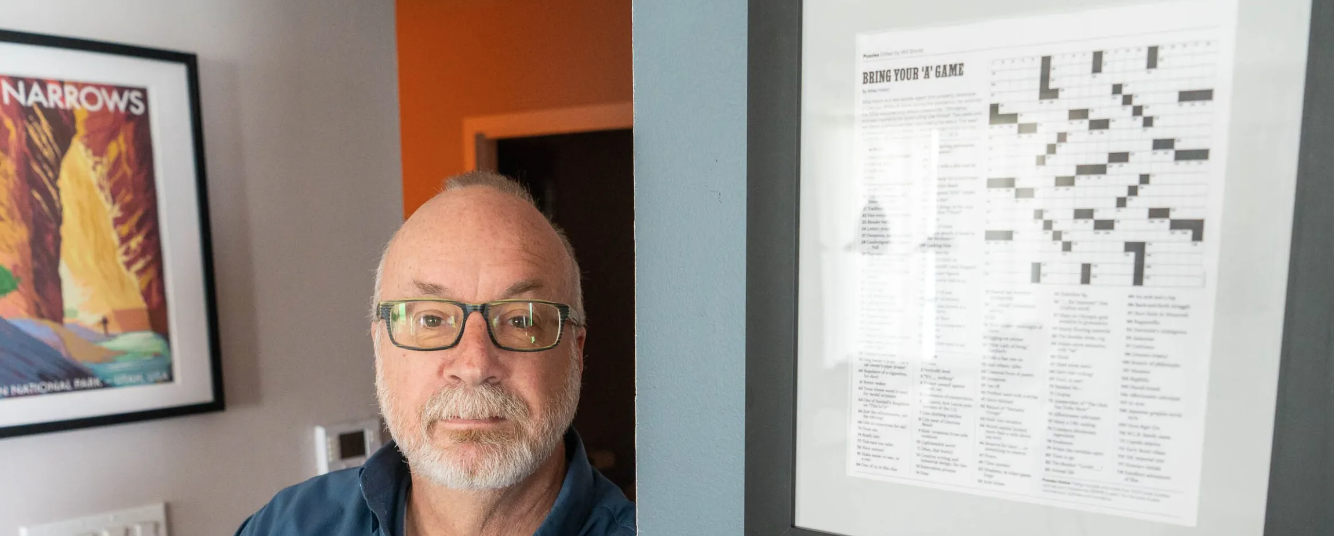
Mike Hobin a real estate agent thought that it would be interesting to start making his own crossword puzzles in the early days of the pandemic. Little did he know that not long after he would get his puzzle published in the New York Times crossword.

He compares the process of creating a puzzle as riding a bike. In the beginning it is a hard exercise then as you do it more, you get used to it and enjoy doing it, figuring playful punny words while brainstorming for ideas. It is no longer a challenge.

To make matters more serious Hobin, bought a crossword making software and dedicated a good amount of time to the puzzles almost every day.

He then started hoping or dreaming about being good enough one day, to be able to get his crossword published by the NY Times crossword. Even though the NYTimes magazine encourages everyone to give it a try, among hundreds of submitted puzzles only a fraction make it to the publication.

And so he did. He dedicated some time to his new goal. Make some crosswords, send them to the times and see what will happen. The rejections followed as you can imagine. But with each rejection came the instructions on how to improve and send a better puzzle. Hobin was very persistent and this puzzle hobby got the hold of him because he started seeing clues everywhere from daily chitchats to songs or movies, everyday he was engaged in this word play you might say. Every hobby you invest yourself to will dictate your daily routine. Then in the last Dec after being rejected more than 20 times Hobin got a new response.

The response was not a yes but it was not rejected either. He was asked to rework it a little bit, make a few improvements here and there and then a few days later he was published and as a Sunday puzzle. The theme of the puzzle was “Bring Your ‘A’ Game”. As you probably already know, each puzzle on the NYTimes comes with a compensation of $1,000 or more. Nobody does it for the money though, it is the pleasure of being published that tops anything else.

Crosswords: More effective than other games in Memory Loss Prevention

Image

Crosswords, while not a treatment by itself, could be come a home based, cognitive improvement tool for seniors with cognitive impairment if the results are replicated and confirmed in other studies.

Crosswords have shown a slight advantage compared to other digital games, they have proven to be better in improving the memory in old adults which have been diagnosed with light cognitive problems according to yet another study on this matter.

A controlled and randomised study  on neurology took place in which participants with a median age of around 70 years old. They trained and played crosswords and a notable cognitive improvement was detected. The results are not surprising but they are important because of the fact that another study confirms the benefits the crosswords have in reducing the risk of cognitive problems and dementia in adults. Crosswords are very popular and have been played for around 100 years but just recently they have been the focus of such studies which focus on finding ways to slow down dementia which is associated with Alzheimer’s disease.

This study which was conducted by Columbia & Duke University recruited around 100 people which had shown signs of soft cognitive impairment. It demanded them to complete 10 to 14 weeks of crossword puzzles or cognitive puzzles. The medium difficulty puzzles were similar to those of other popular puzzles like LaTimes or WSJ. While the trivia puzzles included matching, spatial recognition, and speed thinking tasks.

In late years many advances and clues have been examined, all geared towards understanding Alzheimer’s better and find new treatments or beneficial activities that support slowing down the progress of it. It has been clear that besides drugs and diagnostic tests, alternative methods must be given attention to. Most people never thought of crosswords as a therapy for any brain condition, they dimply enjoy playing them.

New studies are needed to confirm the findings and re-examine crossword puzzle benefits in a much broader study with more participants, in order to better understand.

Thursday’s Puzzle Commentary

Image

ImageIf you remember we told you before that if a clue includes “e.g” it most certainly means that the item in the clue is part of a speficic category. For example in the clue “Lemon, e.g” might lead us to an answer such as LEGUMES.

Sometimes however you might want to forget all that. And remember that puzzle creators are very playful and make tricky connections. One way to imagine it is to imagine the puzzler as they climb and swing on various ideas of crossword conventions as if they were playing on monkey bars. Very few things are off-limits in terms of using or breaking a “convention” except of course if you were to push another puzzle construction off the monkey bars.

This Thursday Trenton returns with a crossword that will leave you bamboozled, unless you talk back to it or experiment with another puzzle such as WSJ Crossword which comes up several times per week.

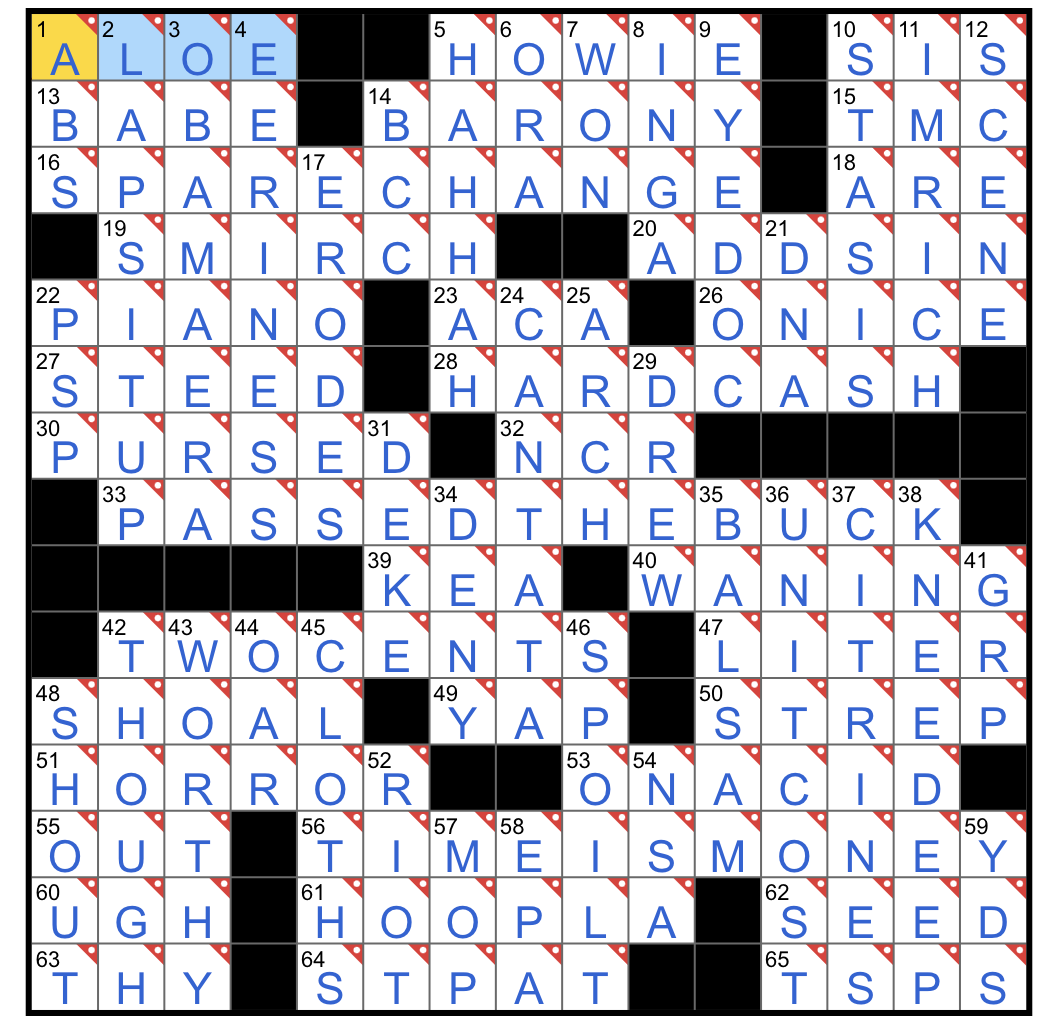
1A/14A. Kinda cute cross-referenced clue. (Yes, it is possible.) A “Creative nugget” is an IDEA,  the “Start” of which is not the letter I but a GERM.

5A. I had POOF before PFFT for “[Just … disappeared!]”

20A. “Introduction to physics?” sounds like a freshman college exam, but here in this puzzle we are only looking for a prefix. The solution  is ASTRO, as in ASTROphysics.

21A. I you are a puzzle history nerd, It is always fascinating to see entries that have not been used for a long time. INKSAC returns to the New York Times Crossword for the first time since 1947.

Thats it folks for today’s puzzle commentary

For full solutions for today’s puzzle open this Link.

Crosswords from Your Home

Image

Image

For most people like you and me, if the possible list of answers becomes too difficult or the right word escapes our mind altogether we put down the incomplete puzzle for good. This is not the case for the dedicated cruciverbalist, whom upon encountering a blank he sees a challenge and puts his will to crack it.

That is the mindset that the Chair of the Finger Lakes Annual XWord Competition mr Gary Weissbrot followed to adress covid-caused postponement that delayed this year’s 8th Annual competition date from March to Sept.

The Tournament is a fundraised which donates all of it’s collected money to Tompkins Learning Partners and consists of people or teams of people competing at 3 different levels of puzzle difficulty to complete crossword puzzles.The event gathered over 350 participants last year, all competing for a little winner glory. The competition is supported by businesses and organizations which include the Ithaca Times as well participants fees which are optional and depends on how much they like contribute.

Like nearly everyone, Weissbot assumed that the pandemic would be over by summer, he said, but as Summer came and the rate continued to increase, in many cases spiking in July, he knew they would never be able to meet in person. He was left with two options: officially cancel the event or find another way to get people their crosswords.

Option 1.: Cancel the event officially.
Option 2: Find a different way to get people their crosswords.
Refunds were offered even why we planned to reschedule the event to a later date, -said Weissbrot. He was astonished by the number of people that refused the refund and opted for rescheduling it in a later date regardless of when/where.
Weissbrot told that only 2 registrants requested a refund while everyone else either said We will join in September or to Keep the ticket money as they judged it a decent/worthy organisation and would love to see it launch an event next year
The two participants were Cornell Graduates who were going home in May he said.

This way Weissbrot decided to relocate the event from the Crowded Boynton Middle School to the kitchen tables, park benches and living rooms or local parks  of this year’s players in the Competitions first-ever “Honor” tournament.
We found a way to keep the tradition alive by doing it Online instead of cancelling this event. On your own schedule we will all participate in the 8th Annual Honor Event – the website states.

Being an “Honor Competition”, each participant will be held responsible for cheating and has the responsibility of reporting their own times cirectly to Weissbrot. A mark of a decicated cruciberbalist is the commitment of completing the crossword puzzle without external help or cheating.

A New Greco-Roman Xword Puzzle – Past U.S Olympians

If everything was normal, we would be one month removed from the Tokyo Olympic Games 2020 and looking forward to the promise of a new quadrennium. Who knows what other side conversations might have popped up by now? Matter of up and coming age groupers, turnover and rule changes often control the conversation on the heels of an Olympiad.

There is no need to discuss these things currently for sure. In one year maybe Yes.  Ut at the moment the concerns are much more in the short term, that is navigating the ongoing pandemic as the sport of wrestling gradually begins to re-awaken although it looks more and more like it won’t actually climb out of bed until after the New Year.

Meanwhile, those in the wrestling industry may need to uncompress. Breathe it out, flex some muscles of their brains in a recreational fashion and have some off-time and – if not intimately familiar with Greco Roman or the US program maybe you need to learn a bit in the process. Which is why we have another Greek Crossword puzzle for you to solve and explore.

The first crossword released back in April was relatively successful and included clues that did not revolve around a single topic. The stances are a little different this time around. This puzzle is all about one thing: past U.S Olympic Team members so be prepared.

Most of the answers should not present a hard-to-crack situation for the older generation. The newer/younger people may stumble here and there because of the time gap of the events although the beauty of a crossword is that one right answer usually leads to another as they are all interconnected and one answer leads ato another and so on.

Depending on the screen size of your phone or tablet/pc it might be necessary to scroll right to input answers. All the clues of the puzzle are located beneath the puzzle itself in order to optimize the user experience.
Good luck!

Can you Solve world’s first crossword ever?

Image

ImagePeople have been challenging and testing their brains capacity since 3000 years BCE, when ancient Sumerians carved puzzles into stone tablets.(Like this one, for example:
“There is a house. One enters it blind and comes out seeing. What is it?”).

Over time, we’ve created puzzles that test a variety of abilities—and we improved  up the most popular structures to make them even more difficult. However as the trouble of brainteasers has evolved, so too has our desire to tap them for sweet rest from the ordinary.
Enjoy a little free time and escape to see how many of these you can break.

Players feel a little teen rush when the solution found. Studies also says that pleasure probably won’t be the main advantage to crosswords: Regular playing may help slow down memory loss and other signs of cerebral ageing.

107 years ago when a brand new newspaper in NEW York City published first crossword the readers weren’t so interested. But in time the audience got bigger and now involves hundreds of thousands of fans who play and try to solve the puzzle every day.

Maze
Three-dimensional labyrinths can cause us to feel as though there’s no way out. Even in 2D, a distracting point represents a special test to our navigational abilities.

If the  road is quite circular even on paper, our hippocampus, which manages learning and memory, starts in overload to give meaning to the environment.
It uses visible signs – say a familiar familiar return – to help us clear the way from one end to the other.

Sudoku
You can give the answer to almost anything as long as there is a minimum of 17 numbers filled in at the beginning.Unlike crossword puzzles, these numerical networks require zero vocabulary skills as you only have to deal with numbers. While doing one day by day probably won’t transform you into an arithmetic marvel, a few studies have suggested that these sort of tasks can help keep  your brain in shape.

Logic
For over 1100 years, rationale puzzles have revealed how well we can reason. Despite the fact that solving them can demand some tricky calculations, they involve once in a while some traditional arithmetics.
They also test less concrete skills like imagination and memory.

Delhiwale: Chai served with a crossword puzzle

Image

Alumuddhin who serves the first half of the day, is full of gossip jokes and kind of noisy. Although sudden flashes of anger are not uncommon, they however dissipate within seconds. Sirajuddhin, his younger brother is by contrast much quieter and calm and he communicates though his gentle smile, almost as if he is secretly delighted at the ways of the busy city life.

It is like a crossword puzzle. Sirajuddhin tea stall is one of the most fascinating street side chai stops in the city. It is unique. On a shelf clamped into the wall ther is a wooden slab running from top to bottom and left to right. This divites the shelf into a stack of square shaped spaces, thus making it look like a sort of crossword puzzle that you often encounter in newspapers.

Of course instead of the alphabet letters the little boxes are usually congested with tea things. One box might have ginger sprigs and pink mugs. Another might have a kettle whose chipped texture is so evocative of the everyday chai civilisation that a history fan might feel tempted to steal it and display on his room. A close=by box is filled with China cups, tea glasses and the box below is packed with tiny metal trunks, or possibly a cash box. On the top row a box is over-stuffed with rusting metallic tea carriers that hold several chai glasses together.

Everything about this chai stall place was set up by the senior of two brothers. Including the wooden shelves according to Alimuddhin. The brothers house is just a few meters away.

The place has a couple of small steps beside it and one does not see the customers crowding up, enjoying their chai while watching the flood of traffic of dogs, mules, people, motorcycles go on with their daily routine on the lively street.

The VIP seating however is just across the lane, under a beautiful tree beside an uknown’s person marble grave. The tea shop regulars sit there all day long, chatting over the cups of Sirajuddhin’s chai with milk. The regular snacks are also served: fen and biskuts. The place starts serving daily from 5Am to 10PM,alghouth it used to stay open till late night during the pre-pandemic days.

On the day this place WAS SHUT closed with a wooden lid, the sight was haunting. It was such a rare afternoon as it seemed like the corner had lost an iconic part of it.